End of Service Gratuity reform: global lessons on the role of technology
03 Dec 25


End of Service Gratuity reform: global lessons on the role of technology
Executive Summary
An End of Service Gratuity (EoSG) is a severance payment granted to employees at the end of their employment contract within the Gulf Cooperation Council (GCC) region. Rather than being a traditional form of pension savings, the EoSG serves as a substitute for the pension benefits that employees might miss out on while working in the GCC. This unique system, however, has its challenges, placing unstructured financial burdens on employers and leaving employees uncertain about their financial futures.
However, the reform of the EoSG system presents the GCC with a golden opportunity to innovate and pioneer large-scale Defined Contribution (DC) savings systems. Instead of merely making adjustments to existing practices, the GCC can lead the way in retirement savings, creating a benchmark for global best practice. Embracing this change holds the potential to establish significant new investment vehicles, secure individual financial futures while simultaneously strengthening the regional economy.
Gulf Cooperation Council (GCC): member states
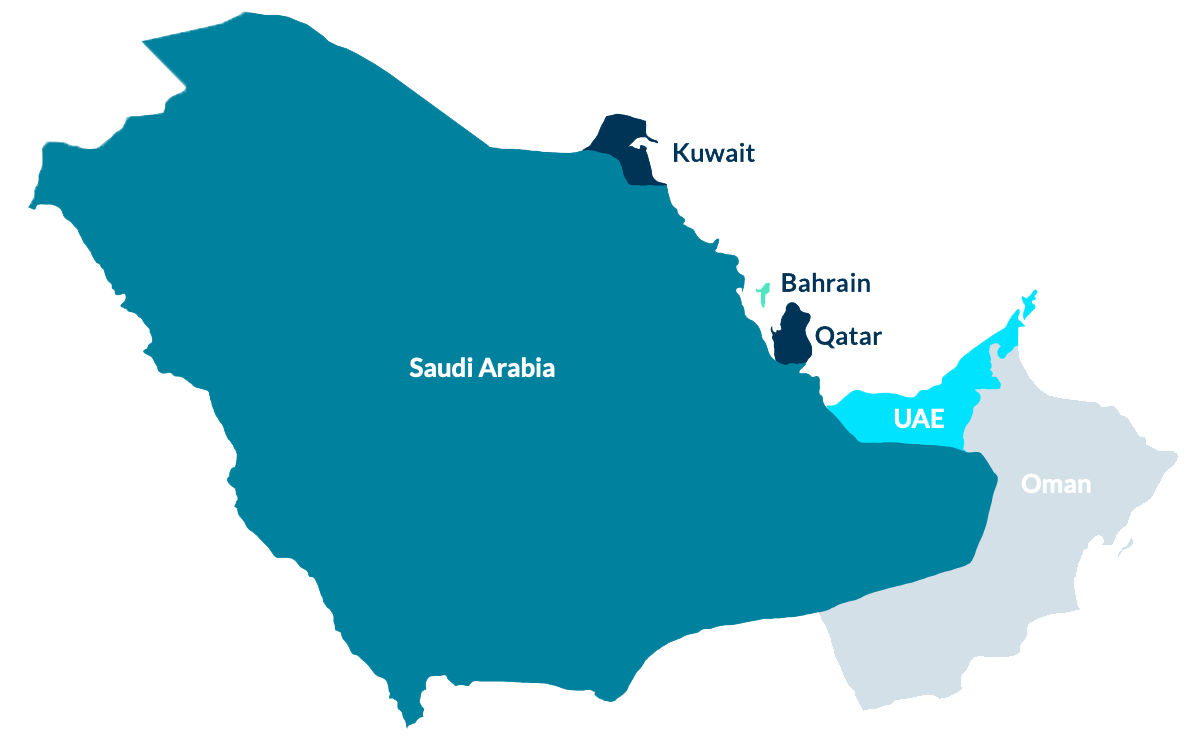
Four crucial aspects stand out in our analysis

Necessity for reform: The existing EoSG framework requires a transformation to align with the evolving work dynamics and growing financial responsibilities in the GCC region. The enhancement of the system is not a matter of choice, but of urgency.

International best practice: As early movers in the GCC start to align their savings systems with models successfully implemented in countries such as the UK, Australia, Singapore, and Hong Kong, the momentum for others in the region to modernise their own systems is palpably increasing.

People-centred innovation: The transformation towards a more efficient savings system hinges on people-centred design principles. Intuitive dashboards, interactive tools, and customisable alerts mean platforms can offer savers both visibility and control over their financial futures. Moreover, strategically crucial adjustments – such as facilitating longer time spent in the market – can have a significant positive impact.

Integrating diverse interests: Pensions and savings technology plays a pivotal role in enabling seamless interactions among varied entities such as payroll departments and financial institutions. Advanced platforms, through their APIs and scalable cloud-based infrastructure, ensure this complex interface while also maintaining adaptability to future policy and regulatory changes.
The urgency of reform
The EoSG model contains a number of systemic disadvantages affecting both businesses and those it employs. For this reason, global bodies such as the World Bank and International Labour Organization (ILO) have been critical of the existing EoSG systems, arguing that they offer an inferior form of social protection. These schemes lack comprehensive benefits, fail to provide predictable payments, and are ineffective at risk pooling and financial safeguarding. All these shortcomings contravene core principles enshrined in international social security norms.
For employers, the current EoSG model presents a range of disadvantages that impact financial health and operational stability. The system imposes uneven cashflow requirements to meet EoSG liabilities, thereby creating financial strain and liquidity issues, particularly in times of economic uncertainty. The risk of underfunding these liabilities looms large, often necessitating rapid financial adjustments that could adversely affect operational budgets. Furthermore, the complex accounting associated with the accrual of EoSG liabilities can introduce additional operational challenges.
For employees, the existing system lacks transparency; the value of their accrued gratuity is often opaque, leaving them in the dark about their post-employment financial health. Moreover, the system does not permit employees to invest their gratuities in pursuit of capital growth or in bespoke funds tailored to their preferences, such as sharia-compliant options. This limits the potential for financial growth and personalisation of retirement savings. Adding to this, in cases where employers become insolvent, employees’ hard-earned gratuities are at significant risk.
International best practice: The global shift towards funded DC structures

Leading financial centres across the globe have embraced funded Defined Contribution (DC) structures as the backbone of their employee benefits systems. This model aligns with the evolving norms of financial security, transparency, and employee empowerment, prevalent in these markets. Moreover, it is favoured by multinational companies for its congruence with their global operations, offering a seamless and efficient approach to providing a high-value employee benefit: long-term savings schemes.
The United States is the largest DC market globally, with an established system of companies saving into 401(k) plans. In the United Kingdom, mandatory auto enrolment into workplace DC pension schemes was introduced in 2012. Having started in the UK market at the launch of auto enrolment, Smart has since built an adaptable technology platform for similar major national reform programmes across the world.
Further East, Hong Kong’s Mandatory Provident Fund (‘MPF’) schemes have made DC auto enrolment compulsory for over two decades, and a groundbreaking centralised national ‘eMPF’ platform is scheduled to launch in 2024. Singaporean companies have compulsory auto-enrolment into the Central Provident Fund (CPF), which is now one of the largest DC funds in the world. China, meanwhile, has also recently announced reforms to introduce a national DC private pension system.
United Kingdom: The power of consolidation and provider exclusivity

Timeframe
First implemented in 2012, the UK’s auto enrolment was fully in effect by 2018.
Consolidation
Originally, the UK market boasted over 80 Master Trusts. Regulatory pressures and a need for economies of scale led to a consolidation, with there now being approximately 30 Master Trusts, with continued consolidation happening at pace.
Regulatory tightening
The UK has seen significant additional focus on schemes in this area, from its dual regulators The Pensions Regulator (‘TPR’) and the Financial Conduct Authority (‘FCA’). The regulatory initiatives have been focused on creating a market in which schemes are well-governed, cost-effective and provide good outcomes to members. This has driven out schemes that are unable to excel in these areas.
Key lesson
The UK’s experience serves as an example of the power of a disciplined market with higher established standards and strong regulatory oversight. It highlights that early market inefficiencies can take several years to organically achieve the requisite efficiencies.
Hong Kong: Driving positive change through technology

Timeframe
The Hong Kong system of Mandatory Provident Fund (MPF) schemes has been in place since 2000, with the new centralised ‘eMPF’ platform set to replace the day-to-day operations of much of the existing system from 2024.
Initial shortcomings
While Hong Kong was ahead of the curve in introducing a mandatory automatic enrolment by companies into pension schemes, a lack of market efficiencies led to high administrative costs and a complicated system for users, in a city with an increasingly fluid labour market and high levels of staff turnover.
Course correction
After years of operational challenges, Hong Kong is set to launch the eMPF platform to simplify administrative tasks and drive lower fees for savers.
Key lesson
Hong Kong’s new model illustrates the potential that can be achieved when public bodies with strong visionary leadership are able to drive new ways of working with private markets. By taking a measured view on how to prioritise the needs of savers, employers and the broader local economy a powerful new pension and savings system is able to emerge.
Glossary


Defined Contribution (DC): In a DC scheme, both the employer and employee contribute a regular percentage of the employee’s salary to an individual account specifically for the employee. The final benefit amount depends on the contributions made and the investment returns achieved.

Defined Benefit (DB): In a DB scheme, employees are promised a specific level of retirement benefit, calculated through a formula typically based on salary and years of service. Employers bear the funding risk and are responsible for ensuring sufficient money is available to meet future obligations.

Funded: In a funded pension scheme, contributions from employers and employees are invested on a regular basis separately to the company’s assets. The resulting fund is used to provide benefits upon retirement. This contrasts with ‘unfunded’ systems where no distinct pool of assets exists.

Unfunded: In an unfunded scheme, there is no separate pool of assets. Retirement benefits are paid directly by the employer or through a government fund, often financed by the company’s current assets or by current contributions from active employees or other sources of revenue.
The GCC today: Signs of progress and adaptation
$400bn estimated total value of EoSG liabilities currently on the balance sheets of companies across the GCC
$60bn estimated annual contributions on a DC basis that would be paid if all GCC countries made similar local labour law changes to those made by the DIFC
https://www.equiomgroup.com/news/unlocking-power-gccs-end-service-liability-benefit
Though the GCC has been relatively slower in adopting this trend towards a funded DC system, it is now showing promising strides towards alignment with international best practices. Noteworthy is Dubai’s pioneering step in becoming the first GCC territory to mandate auto-enrolment for expatriates into DC savings schemes as of 2020 in the DIFC Free Zone. Named the DIFC Employee Workplace Savings (DEWS) scheme, this initiative has recently expanded to include all public sector entities in Dubai. Furthermore, the United Arab Emirates announced in September 2023 that enrolment into DC schemes would become a voluntary option for companies, in lieu of the traditional EoSG system.
In Oman, a new Social Protection Law has been recently enacted to offer unified social insurance coverage for Omani workers, harmonising eligibility conditions and benefit formulas into a single scheme. Among these reforms is the creation of an adaptable, segmented workplace savings system in Oman, including a new provident fund for non-Omanis. The full suite of these reforms is expected to be rolled out within three years.
Both the Oman and UAE reforms reflect a broader willingness within the GCC to modernise and align with international norms, providing more secure and transparent benefits for employees and lessening the financial burden on employers. In this context, employees gain financial security, more transparent investment choices, and in some cases, the opportunity for customised, culturally aligned investment options like sharia-compliant funds. Employers, on the other hand, benefit from a more manageable cash-flow scenario and better alignment with global corporate benefits structures.
The future in the GCC: The main policy options
As the GCC nations look to reform their EoSG and broader social security systems, three main policy options emerge that could align these systems more closely with international standards.
Establishing a publicly managed provident fund system dedicated to administering social security contributions for migrant workers would be one potential option. This model could offer greater transparency and accountability, ensuring the effective management of contributions.
Alternatively, the standard provident fund design itself could be enhanced to address its inherent limitations, particularly in terms of adherence to wider standards within the developed world.
Lastly, another option might involve the replacement of EoSG systems with full inclusion of non-local workers into national social security schemes, executed on the principle of equality of treatment. This would extend the full scope of social protection to this significant segment of the workforce, aligning with international norms and fostering social cohesion.
Each of these options presents its own set of advantages and challenges, requiring a nuanced understanding of their implications. Nonetheless, they collectively offer a roadmap for the GCC countries to construct more robust, equitable, and internationally compliant social security systems.
Technical architecture and market timing

Pensions and long-term savings are complex systems requiring different groups and individuals to communicate and transact with one another. Savers need their money to be turned into investments, employers need to provide their own contributions, savings need to accord with the employee’s salary, they need to be made in a way that reflects any fiscal transfers appropriately, and they need to be responsive to any regulatory change further down the road.
A robust API strategy is critical here, eliminating the requirement for laborious and error-prone manual data entry and saving time and resources for employers. By synchronising the transfer of essential data such as employment commencement dates, monthly earnings, and bonuses, API integration facilitates real-time fund transfers from salary deductions into investment portfolios.
As the popular investment adage goes: “time in the market beats timing the market”. This is all the more so for pension investments, which by their nature operate across lengthy horizons. Research by JP Morgan has found that $10,000 invested on 1 January 2003 would have become $64,000 by 30 December 2022. However, if it had missed the ten best days for investment returns during that period, it would have only been $29,000. Furthermore, seven of the ten best days for investment returns occurred within two weeks of the ten worst days. Cash efficiently turned into investments means more time in the market, which in turn means better outcomes for savers.

Smart’s unique pension technology solution, Keystone, is specifically built and configured to suit a host of different third parties across different geographies. Designed and delivered by a 300+ strong team of engineers, it has been built to allow employers to manage pension processes, employees to manage their savings efficiently, and advisers to act effectively on their behalf, with third party applications able to integrate directly with the API in real time. Keystone is currently used across four continents by large financial institutions and public bodies to deliver contemporary largescale savings and pension products.
People-centred design

One of the challenges with the current EoSG system is its lack of transparency and complexity, often leaving employees reliant on their employers for clear explanations. As we seek to improve upon this framework, it is critical that we don’t replace one model of confusion with another.
Addressing the existing challenges necessitates the adoption of a people-centred design approach, one that values simplicity and engagement. Key to this is an intuitive dashboard that permits savers to gain a straightforward overview of their pension funds. The focus here is not on overwhelming users with multifaceted tools and data but rather on offering a streamlined, accessible interface. The objective is to make the transition from the current EoSG system to a funded DC model smooth, without swapping one form of complexity for another. Such an approach would facilitate greater user involvement without burdening them with excessive choices or technical jargon.
Harry Brignull, Head of UX Innovation at Smart, has pioneered research in identifying ‘deceptive patterns’ – manipulative design features that can lead users astray. As Brignull argues in his recent book, “Deceptive Patterns – Exposing the Tricks that Tech Companies Use to Control You”, such practices can manifest in various ways. The use of confusing terminology can obfuscate the complexities of financial products. Misdirection is another problematic design element, subtly guiding users toward actions that may not be financially advantageous. Additionally, hidden costs often go undisclosed until users have already committed, trapping them in less than favourable financial situations. To counteract these pitfalls, Brignull advocates for what he terms ‘ethical nudging’: directing users towards choices that are in their best interest while maintaining complete transparency.
Quick, responsive design features also hold significant value, as evidenced by Smart’s own introduction of a ‘Pause Contributions’ button during the initial stages of the COVID-19 pandemic. Unlike other systems and schemes that require members to opt out and then choose to rejoin at a later date, Smart’s innovative functionality allowed members to pause their voluntary contributions for a pre-defined number of months, with contributions then automatically restarting after that period had elapsed. This feature was swiftly implemented and proved invaluable to many members, granting them a temporary reprieve from their voluntary contributions while keeping them in active membership. By doing so, it continued to guide members toward achieving a comfortable retirement, even during an unexpected crisis.
Many options, made simple
Pension and long-term saving schemes in the Gulf region face the complex task of accommodating various work types and contract systems. Savers differ greatly in risk appetite and financial sophistication. To effectively navigate this environment, technology platforms underpinning these schemes must bring together the best of traditional pension systems with modern wealth platforms. These platforms must excel in regulatory adaptability and offer a wide range of asset classes. They should also provide personalisation features, allowing users to tailor portfolios according to their specific needs, such as risk diversification or ethical investment choices. Additionally, platforms should offer both global and local asset classes to cater to the diverse population in the Gulf. Automation capabilities, like automated portfolio rebalancing and ‘lifecycle’ funds, can further simplify the investment process for savers.
The UK’s recent Mansion House reforms are an instructive example of what systems could be able to adapt to. These groundbreaking measures have seen DC pension schemes vow to allocate 5% of their default funds to unlisted equities by 2030. By doing so, the reforms seek to extend the gamut of asset classes available to pension savers and furnish them with access to high-growth private companies, enhancing their investment returns and acting as a catalyst for private-sector growth.
Gulf states may wish to enable investment access to private capital. Some may see the value in earmarking a certain percentage of workplace pension investments in, say, local companies. Changes that appear simple on paper, however, may be challenging to implement in practice: as lucrative as investing in private capital may be, it comes coupled with a host of technical challenges on the saver side that demand careful attention. Regardless of what policymakers choose, it is critical that they embrace a flexible underlying technology
The future in the GCC: Exploring a pan-GCC ‘clearing house’ concept
As the GCC nations undergo significant economic and social change, one possible future model could be a pan-GCC ‘Clearing House’ for the region. Such a model was recently proposed by the International Labor Organization (‘ILO’) in their paper ‘Reforming end-of-service indemnity for migrant workers in Member States of the Cooperation Council for the Arab States of the Gulf (GCC)’. This would be a unified system to streamline pensions investment, clearing, and liquidity across the GCC, drawing inspiration from the concept of Pan-European Personal Pensions (PEPP) scheme in the European Union. The PEPP model facilitates pension contributions across EU member states, achieving economies of scale, diversifying investment portfolios, and enhancing consumer choices.
Importantly, some portability already exists within the GCC for DB pensions among nationals. GCC nationals working in a member state other than their own can have their pension contributions transferred to their home country’s DB pension system. This means that their years of service in one country can count towards pension eligibility in another. This existing feature could serve as a foundation for a more expansive system, potentially incorporating DC schemes and including both nationals and non-nationals.
One of the most transformative elements of an ILO Clearing House lies in its potential for helping savers build long-term investment strategies. Unlike existing pension systems that often focus on short-term objectives, this unified approach could allow pension funds to concentrate on the ultimate objective of retirement. This is of particular significance in the GCC, where a large proportion of the workforce consists of migrant workers. Instead of fragmented investment strategies that centre on payouts at various company leaving dates, a unified system would allow for long-term plans focused on retirement dates. This paradigm shift holds the promise of delivering better financial outcomes for all scheme members.
However, the implementation of such a unified system poses challenges that would require meticulous planning and collaboration among GCC states. Two of the most pressing issues are the identification of individuals across different GCC jurisdictions and the complications related to currency conversion risks. Advanced technology solutions could play a vital role in addressing these challenges.
Practical and future-ready pension reform

Reform of the EoSG system in the GCC is not just a routine policy update, but a real opportunity to set a forward-thinking standard in pension savings. This change is a chance for the GCC to lead with a model that secures financial futures and bolsters the regional economy, setting a global benchmark in DC systems.
At the heart of this reform is establishing a user-centric way of saving, using technology to create systems that are both accessible to individuals and flexible enough to adapt to future policy changes and regulatory requirements. By adopting this approach, the GCC can lay the groundwork for a pension system that combines efficiency, user engagement, and long-term sustainability, positioning itself as a leader in the global arena of pension reform.
Contact us
To delve deeper into the transformative impact of long-term savings and pension systems in the Gulf, and to uncover how cutting-edge technology can foster a stronger and more inclusive financial ecosystem, connect with Smart. With an established presence in the Middle East and around the world, our specialists are prepared to assist in unravelling the complexities.